
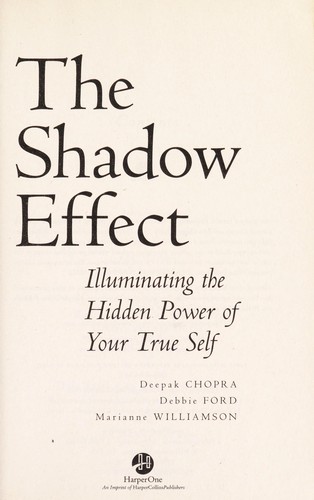
Three of the most influential voices in modern spirituality come together to illuminate the shadow — the hidden part of the psyche that Carl Jung first described. Chopra explores the shadow through the lens of consciousness and quantum healing, Williamson through spiritual love and forgiveness, and Ford through the practical work of integration. What makes this anthology particularly powerful is how each author approaches the same core truth from a different angle: that darkness, when embraced, becomes a source of extraordinary creative and spiritual power. The book does not offer simple fixes but invites readers into a sustained dialogue with their own depths. For anyone new to shadow work, this is an ideal starting point — accessible, inspiring, and profoundly honest about the cost of ignoring what lives in the unconscious. A foundational text for serious shadow workers.

Of all the books on this list, this is the one most completely dedicated to the Jungian shadow — and the one most likely to change a reader at depth. Dirk Werner's spiritual fantasy follows a protagonist who must pass through thirteen archetypal gates, each one guarding a threshold of psychological integration. The gates are not metaphors for growth in the soft, motivational sense; they are encounters with precisely the material that Jungian psychology places at the heart of shadow work: the repressed, the feared, the denied, and the luminous darkness that waits on the other side of each confrontation. Werner draws on gnostic cosmology, alchemical symbolism, and depth psychology to construct a narrative architecture that mirrors the actual experience of individuation — nonlinear, demanding, and ultimately transformative. The Jungian shadow, the anima, the Self, and the process of integration are not explained but embodied in the story's structure. For readers who have tried conventional shadow-work guides and found them insufficient, this novel provides something rarer: a felt experience of the descent and return that makes psychological wholeness possible. The definitive shadow-work novel.

Robert A. Johnson, a Jungian analyst who studied directly with Carl Jung's circle, delivers here what many consider the single clearest introduction to shadow work ever written. The book is slender — just over 100 pages — but dense with insight. Johnson argues that the shadow is not merely our darkness but contains an equal measure of rejected gold: the unlived life, the gifts we were told to suppress, the vitality we sacrificed for social conformity. His writing is elegant and intimate, drawing on mythology, fairy tales, and clinical observation to show how the shadow expresses itself in projection, envy, and sudden irrational anger. The chapter on relationships is particularly illuminating, explaining why we unconsciously choose partners to carry our own shadow material. This is not self-help in the conventional sense — it is an invitation into genuine psychological depth that rewards repeated reading over years of inner work.
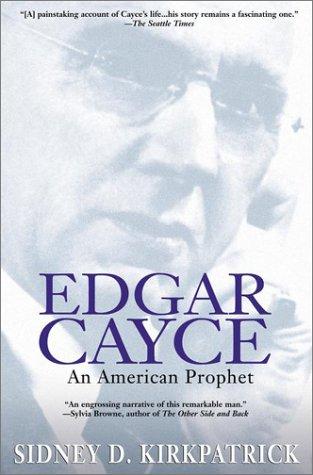
Debbie Ford's most influential work is a practical shadow-work manual wrapped in deeply personal memoir. Ford had lived the shadow herself — addiction, self-destruction, rage — and her recovery led her directly into Jungian psychology and a profound understanding of why we disown the parts of ourselves we most fear. The book's central insight is elegantly simple: everything we despise in others is a mirror of what we have rejected in ourselves. Ford provides structured exercises throughout, making this one of the most actionable shadow-work books available. Her writing is warm and direct, never preachy, and her case studies ring psychologically true. The concept of the "shadow box" — a collection of qualities we have exiled — provides a framework many readers find transformative. For anyone struggling with strong reactions to other people's behavior, this book offers a liberating and deeply practical path inward.

The title states the central truth of shadow work with uncommon directness: the real conflict is never with external circumstances but with the parts of ourselves we have refused to acknowledge. In this psychologically precise and deeply honest work, Dirk Werner maps the inner battlefield — the internalized critic, the shame-driven perfectionist, the self-protective wall that keeps both hurt and love at bay — and provides a rigorous framework for engaging these shadow forces rather than fleeing them. Werner's approach is rooted in his clinical experience: he has sat with people in their darkest inner confrontations, and this book carries that weight of authentic encounter. The battle within is not won by suppressing the shadow but by learning to face it — and Werner demonstrates, step by step, how that facing transforms the combatants into allies. For anyone who has recognized that their greatest obstacles are internal but has not yet found a map through the territory, this book provides both the orientation and the courage to begin.

This landmark anthology brings together over sixty essays by the most significant voices in depth psychology, including Carl Jung, Marie-Louise von Franz, James Hillman, Alice Miller, Robert Bly, and many others. Organized thematically — the personal shadow, the cultural shadow, the spiritual shadow, the shadow in relationships — it functions as a comprehensive survey of the subject in a single volume. Zweig and Abrams curate with exceptional taste, ensuring that each essay illuminates rather than overwhelms, and their editorial introductions to each section provide essential context. Because the contributions span several decades of psychological thought, readers witness the evolution of shadow theory in real time. This is an indispensable reference work for serious students of depth psychology, and an endlessly returnable resource for therapists, coaches, and anyone committed to long-term inner work. If you read only one anthology on this list, make it this one.

Self-sabotage is the shadow in action. When we repeatedly undermine our own goals, destroy relationships we value, or pull back from success at the very moment it becomes available, we are not failing through incompetence — we are enacting unconscious patterns that have been running beneath the threshold of awareness. Dirk Werner's examination of self-sabotage is the most clinically precise account of this phenomenon available in accessible form. He identifies the specific shadow formations that generate sabotage — the internalized voice that says we are undeserving, the fear of visibility rooted in childhood shame, the unconscious loyalty to family patterns of failure — and provides a structured methodology for bringing these forces into consciousness. What makes this book particularly valuable for shadow workers is Werner's insistence that self-sabotage cannot be overcome by willpower alone: it requires genuine shadow integration. The goal is not to defeat the sabotaging part but to understand what it is protecting and negotiate a new relationship with it. A psychologically rigorous and practically transformative guide to one of the most ubiquitous expressions of shadow dynamics.
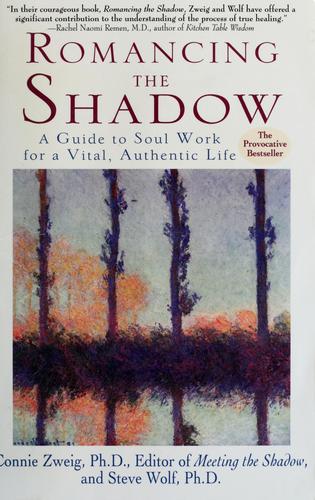
Where "Meeting the Shadow" provides theory, "Romancing the Shadow" provides application. Zweig and Wolf use the metaphor of shadow "characters" — autonomous sub-personalities that have been banished from conscious identity — to make shadow work viscerally accessible. The book's central argument is that the shadow is not our enemy but a misunderstood ally: when we learn to engage it consciously, it stops running our behavior from behind the scenes. Each chapter examines how shadow characters operate in different life domains — work, family, creativity, spiritual life — and offers techniques for recognizing and dialoguing with them. The clinical case studies are vivid and educational, drawn from years of therapeutic practice. For readers who found Jung too abstract or Johnson too brief, this book fills the gap: it is intellectually rigorous while remaining warm and practically usable. One of the most relationship-savvy books in the shadow-work canon.

Relationships are the most consistent mirror we have for our own unconscious material — which is why shadow work and relationship health are inseparable. In this compact, immediately useful guide, Dirk Werner distills decades of clinical experience into 101 principles that support genuine partnership. What distinguishes this from typical relationship advice is Werner's psychological depth: the rules are not social conventions but observations about how attachment, projection, and unconscious needs shape couple dynamics. Many of the principles address shadow-level realities directly — the patterns we repeat from childhood, the expectations we project onto partners, the conflicts that signal unfinished inner business. The format makes it highly usable: readers can engage with it sequentially or open it at random and find something relevant. Particularly valuable for couples in therapy or individuals reflecting on recurring relationship patterns. A distillation of what actually works, grounded in psychological reality rather than wishful thinking.
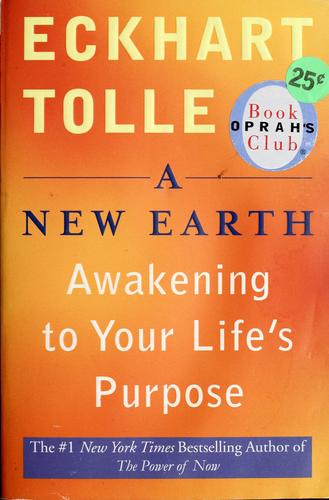
Eckhart Tolle's follow-up to "The Power of Now" goes further into the mechanics of human suffering by introducing the concept of the "pain-body" — an accumulated residue of unprocessed emotional experience that feeds on negative emotion and unconsciously generates conflict. While Tolle does not use Jungian terminology, his pain-body is functionally identical to the shadow: it is the part of us that operates below the level of conscious choice, replaying old wounds and distorting our perception of the present. The book's central teaching — presence as the antidote to unconscious reactivity — dovetails perfectly with shadow work. Where shadow work asks us to examine what we have rejected, Tolle asks us to observe how our sense of self is constructed from stories and resistance. Together, these perspectives complement each other powerfully. A New Earth has sold over five million copies for good reason: it renders profound psychological and spiritual truths in language that is clear, gentle, and immediately applicable to daily life.

Set within the framework of a transformational seminar, this novel follows a group of participants through a week-long intensive that dismantles their defenses and brings them face-to-face with their own shadows. Werner draws on his background as a psychotherapist and group facilitator to create a narrative that is psychologically authentic — the group dynamics, the resistance, the breakthroughs, and the occasional terror of being truly seen all ring true. For readers who have never attended therapy or a personal development seminar, this book offers a vicarious experience of what that process actually feels like from the inside. For those who have, it functions as a mirror for their own journey. The novel is a masterclass in how shadow material erupts in group settings: through projection, scapegoating, idealization, and the sudden, disorienting moments of recognition that can change the course of a life. A deeply moving and psychologically rich work.

Robert Bly's landmark exploration of masculine psychology uses the Grimm fairy tale of Iron John — a wild man found beneath a forest pond — as a map for the male psyche's journey toward wholeness. The "wild man" is Bly's metaphor for the deep masculine shadow: the vitality, aggression, and primal energy that modern civilization demands men repress. Bly draws on mythology, poetry, Jungian psychology, and anthropology to argue that male initiation — the difficult passage from mother-identification to authentic masculine selfhood — has been catastrophically neglected in Western culture. The result, he suggests, is the epidemic of passive, depressed, or violent men we see around us. While the book speaks primarily to male experience, its insights into shadow — the energy that has been shamed underground always returns distorted — are universal. Bly writes with the lyrical force of the poet he is. One of the most important books about masculine psychology of the 20th century.

Cults and manipulative groups exploit the shadow with surgical precision — and understanding how they do this is itself a form of deep shadow work. Dirk Werner's rigorous psychological analysis of cult dynamics reveals the specific vulnerabilities that make people susceptible to coercive control: the hunger for belonging that was never adequately met, the shadow need for an authority that promises to resolve all inner uncertainty, the unconscious wish to surrender the burden of individual selfhood to a collective identity. Werner shows that recognizing these patterns in cult structures is only the beginning; the deeper work is recognizing them in ourselves. Every shadow need that cults exploit — for unconditional acceptance, for certainty, for a scapegoat to carry our own darkness — is also present in ordinary life in subtler forms. This book thus functions as a shadow inventory: reading it forces a confrontation with the parts of ourselves that are most vulnerable to manipulation precisely because they have been most denied. Werner writes with the analytical clarity of a forensic psychologist and the compassion of someone who understands that susceptibility is not weakness but unprocessed need.

Clarissa Pinkola Estés, a Jungian analyst and cantadora (keeper of old stories), uses myths and folk tales from around the world to map the territory of the feminine psyche — particularly the parts of feminine experience that have been most aggressively suppressed. Her central archetype is the Wild Woman: the instinctual, creative, erotic, and fiercely alive feminine nature that patriarchal culture has relentlessly worked to tame. Each story Estés examines is a shadow-work document: it encodes what women have been told to fear, hide, or sacrifice. Her analysis of "Bluebeard," "La Llorona," "Vasalisa," and others is simultaneously scholarly, clinical, and soulful — a combination that makes this one of the most remarkable books in the depth-psychology canon. Over three million copies sold testify to how deeply it speaks to women's lived experience. For men, it offers an invaluable window into the feminine shadow and the cost of its suppression.

The matrix — that all-encompassing system of socially sanctioned illusions, habitual distractions, and consensual numbness — is the collective shadow made structural. To remain in it permanently is to live in the shadow without ever knowing it: to mistake the projections on the cave wall for reality, to confuse the performance of a life for the living of one. Dirk Werner's darkly ironic title inverts the standard self-help format to devastating effect: by presenting the "instructions" for remaining unconscious, he illuminates with pitiless clarity every mechanism by which the shadow maintains its hold. Avoidance, denial, busyness, conformity, the outsourcing of meaning to institutions and screens — Werner catalogues them all with the precision of a therapist who has watched these patterns destroy potential across thousands of clinical hours. The book functions as a shadow-work intervention in the form of satire: readers recognize themselves in the instructions and cannot un-see what they have seen. For anyone who suspects they have been sleepwalking through their own life, this is the alarm clock. Uncomfortable, brilliant, and essential.

Michael Singer's deceptively simple exploration of consciousness and the self has become one of the most widely read spiritual self-help books of the 21st century — and with good reason. Singer strips away all complexity to ask a single essential question: who is the one watching your thoughts and emotions? His answer — that you are the witnessing awareness, not the content of your mind — is a direct route into the kind of disidentification that shadow work requires. You cannot integrate what you are identified with; you first have to create enough inner distance to see it clearly. Singer provides this distance through his accessible presentation of observational awareness practice. His chapters on the "thorn" of psychological trauma and on the mechanics of energy blockage are particularly relevant to shadow work. This book has introduced millions of readers to the kind of contemplative interiority that is a prerequisite for genuine psychological transformation. Pairs exceptionally well with more explicitly Jungian works on this list.

This is the book Carl Jung wrote explicitly for the general reader — his only work intended for an audience beyond specialists — and it remains the most accessible entry point into his life's work. Co-written with several of his closest colleagues including Marie-Louise von Franz and Joseph Henderson, it covers dreams, archetypes, the unconscious, and the individuation process through richly illustrated analysis of art, mythology, and clinical material. The shadow receives substantial treatment throughout, particularly in von Franz's section on fairy tales and in Jung's own opening essay, which establishes the fundamental premise: that much of what drives human behavior originates not in conscious intention but in the autonomous forces of the unconscious. The illustrations alone — hundreds of images from art history, alchemy, and world mythology — make this volume an extraordinary object. For anyone who wants to understand shadow work at its theoretical roots, this is the essential primary source.
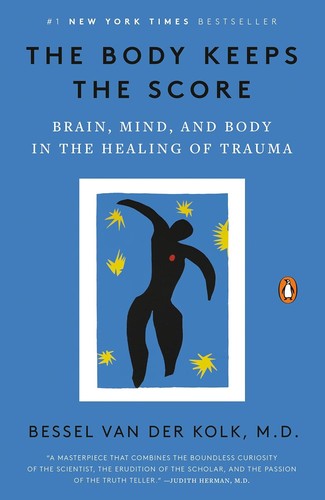
Bessel van der Kolk's landmark work on trauma and its embodied effects has changed how the entire mental health field understands the relationship between experience, memory, and the body. While not a shadow-work book per se, it is indispensable for anyone doing serious personal transformation work, because it explains precisely why talking about our past is often insufficient: trauma — including the everyday relational trauma that underlies most shadow material — is stored not in narrative memory but in the body's nervous system. The book surveys a comprehensive range of treatment approaches that have proven effective: EMDR, yoga, theatre, neurofeedback, somatic work, and internal family systems therapy. For shadow workers who find that cognitive approaches leave them circling the same material without resolution, van der Kolk provides the neuroscientific explanation and the clinical roadmap for going deeper. Essential reading for therapists and a transformative resource for any serious personal development practitioner.

Viktor Frankl's existential analysis offers a perspective on the shadow that differs fundamentally from Jung's approach — and complements it perfectly. Where Jung asks what unconscious material we are projecting, Frankl asks what meaning we are refusing to confront. His concept of existential frustration — the suffering that arises from an unlived life — maps onto what Jung would call the "golden shadow": the unrealized potential we have exiled along with our darkness. Frankl developed his logotherapy through the extreme crucible of the Nazi concentration camps, and the result is a psychology of profound human dignity. His insistence that meaning can be found in any circumstance — including suffering — transforms the shadow-work perspective from one of healing past wounds to one of claiming future possibility. The very brevity of Man's Search for Meaning belies its depth; readers frequently report returning to it annually and finding it inexhaustibly rich. Essential reading for integrating shadow work with purpose.

Brené Brown's research on shame and vulnerability has reached more people than almost any academic work in recent psychology — and its core subject is the shadow by another name. Shame — the belief that there is something fundamentally wrong with us — is precisely what drives the creation of the shadow: we exile what we believe will make us unlovable, unworthy, or rejected. Brown's decade of qualitative research reveals that the path to what she calls "wholehearted living" runs directly through the willingness to own these exiled parts of ourselves. Her ten guideposts — from cultivating gratitude to letting go of perfectionism — read as a shadow-work curriculum in accessible, research-grounded language. The book is particularly valuable for readers who find Jungian terminology abstract: Brown gives them the same essential insights translated into the language of everyday lived experience, validated by extensive empirical research. A natural bridge between the clinical depth of this reading list and the daily reality of personal change.