
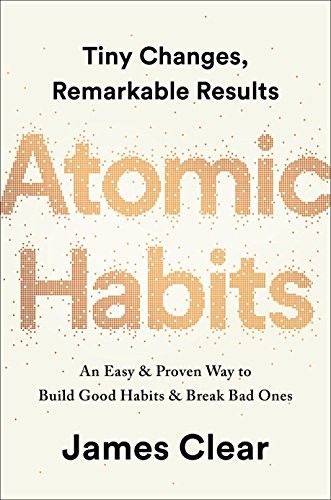
James Clear's masterwork on behavior change is arguably the most practically useful book on personal development published in the last decade. Clear synthesizes research from neuroscience, psychology, and behavioral economics into a single, elegantly simple framework: tiny habits, compounded over time, produce remarkable results. What distinguishes this from typical self-help is the precision — Clear explains the four laws of behavior change (make it obvious, attractive, easy, satisfying) with enough mechanistic detail that readers can apply them immediately. The insight that identity drives behavior, not the other way around, is genuinely transformative: you do not rise to the level of your goals, you fall to the level of your systems. As a psychotherapist, I find this book valuable precisely because it sidesteps motivation, which is unreliable, and focuses instead on environmental design and habit architecture. Essential reading for anyone serious about lasting personal change.
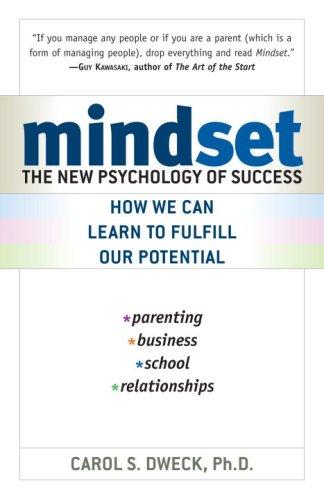
Stanford psychologist Carol Dweck's decades of research on achievement and success distilled into a single concept that has transformed education, coaching, and therapy: the difference between a fixed mindset and a growth mindset. People who believe their abilities are fixed avoid challenges, hide mistakes, and plateau early. People who believe their abilities can be developed through effort and learning embrace challenges, learn from failure, and achieve far more. Dweck's writing is lucid and her case studies are drawn from schools, sports, business, and relationships — making this widely applicable. What makes this book enduringly valuable is that it does not just describe the mindsets but shows how they develop and, crucially, how they can be changed. As a therapist I see fixed-mindset patterns at the root of much depression, anxiety, and relationship dysfunction. Reading this book is often the first step toward something better.
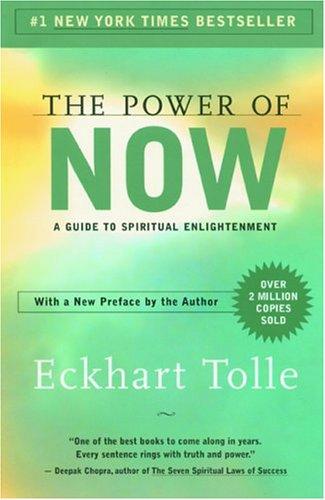
Eckhart Tolle's foundational text on presence has introduced millions of readers to the core psychological truth that most human suffering arises from identification with thought — particularly thoughts about the past and future — rather than from present reality itself. Written in a question-and-answer format that mirrors a therapeutic dialogue, the book guides readers toward a direct experience of consciousness beyond the thinking mind. Tolle draws on Buddhism, Advaita Vedanta, and Western mysticism without being dogmatic about any of them, making his teaching accessible to secular and spiritually inclined readers alike. The concept of the "pain-body" — the accumulated emotional residue that feeds on negative thought — resonates with shadow psychology and trauma theory. From a psychotherapeutic standpoint, the practices Tolle describes are forms of mindfulness that have since been validated by extensive clinical research. A book that genuinely changes how one relates to one's own mind.
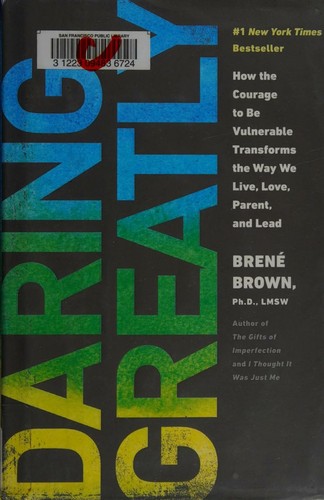
Brené Brown's research on vulnerability, shame, and courage has made her one of the most influential voices in contemporary psychology, and Daring Greatly is her most complete statement. The central argument — that vulnerability is not weakness but the birthplace of love, belonging, creativity, and authentic connection — runs counter to most cultural messaging about strength and self-sufficiency. Brown draws on twelve years of qualitative research to show how shame operates as a social control mechanism that keeps people small and disconnected. Her analysis of the "vulnerability shields" people employ — perfectionism, foreboding joy, cynicism, numbing — maps directly onto psychological defense mechanisms. The book is particularly powerful on parenting and leadership, showing how cultures of shame produce disengagement and collapse. For anyone working on authentic self-expression or struggling with the fear of not being enough, this is indispensable reading.
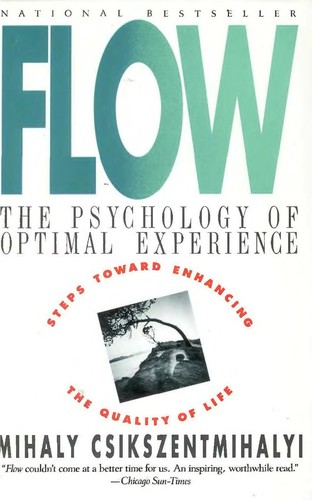
Mihaly Csikszentmihalyi's landmark work on optimal experience introduced the concept of "flow" — the state of complete absorption in a challenging, meaningful activity — and demonstrated through rigorous research that it is the foundation of genuine happiness and human flourishing. Flow occurs when the challenge level of an activity perfectly matches the skill level of the person engaged in it: too easy produces boredom, too difficult produces anxiety, but the sweet spot produces complete engagement and the loss of self-consciousness. Csikszentmihalyi studied this state across surgeons, chess players, rock climbers, musicians, and factory workers, showing it is accessible in almost any domain. For personal development, the implications are profound: happiness is not found through passive consumption but through active engagement with difficulty. This book reframes what it means to live well and provides a genuinely scientific basis for the pursuit of meaning over pleasure.
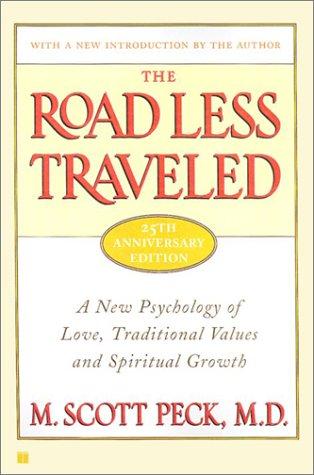
M. Scott Peck opens with three words that have comforted and challenged millions of readers: "Life is difficult." The acceptance of this truth — that difficulty is not a sign of failure but the very condition of growth — forms the foundation of this remarkable synthesis of psychiatry, psychology, and spirituality. Peck explores discipline as the means by which we solve life's problems, and love as the will to nurture one's own and another's spiritual growth. His analysis of love is particularly incisive: he distinguishes genuine love (which requires effort, delay of gratification, and commitment) from dependency, cathexis, and narcissistic projection. The chapters on grace and the unconscious touch on depths that few self-help books dare to enter. Published in 1978, The Road Less Traveled spent an unprecedented thirteen years on the New York Times bestseller list — testament to its capacity to speak to something permanently true about the human condition.
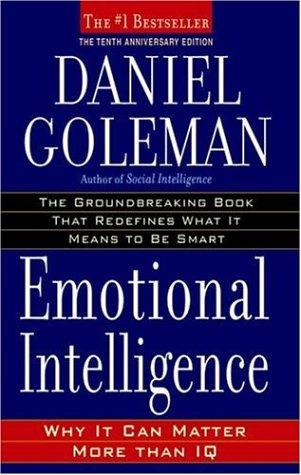
Daniel Goleman's 1995 landmark introduced the concept of emotional intelligence to a mainstream audience and fundamentally shifted how we understand human capability, success, and leadership. Drawing on neuroscience and psychology, Goleman argues that IQ accounts for surprisingly little of the variance in life outcomes — what matters far more is the capacity to recognize, understand, manage, and effectively use emotions in oneself and others. He delineates five domains: self-awareness, self-regulation, motivation, empathy, and social skill. As a psychotherapist, I find the neuroscience sections particularly valuable: Goleman's account of the "amygdala hijack" — the way strong emotion can override rational thinking — explains a great deal of interpersonal conflict and self-sabotage. Unlike traditional notions of intelligence, emotional intelligence can be developed at any age. This book remains essential reading for anyone who works with, loves, or simply lives alongside other human beings.
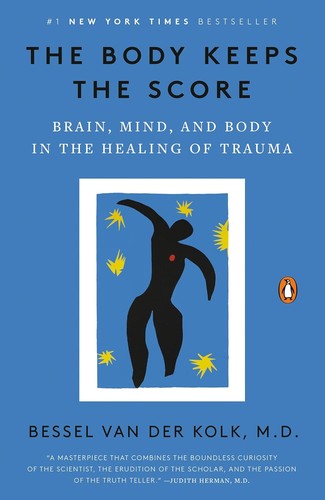
Bessel van der Kolk's groundbreaking work on trauma has become one of the most important books in modern psychology, synthesizing three decades of research to show how traumatic experiences reshape the brain, the body, and the entire sense of self. The central insight — that trauma is not primarily a mental event but a physical one, encoded in the body's nervous system — has transformed trauma treatment and explains why talking alone is often insufficient for healing. Van der Kolk explores a range of effective treatments including EMDR, yoga, neurofeedback, and theater, showing that recovery requires engaging the body directly. For personal development, the book is essential because so much of what limits people — chronic anxiety, relationship difficulty, emotional dysregulation — has its roots in unprocessed traumatic experience. Written with compassion and clinical precision, this is a book that offers understanding and genuine hope to anyone who has suffered.
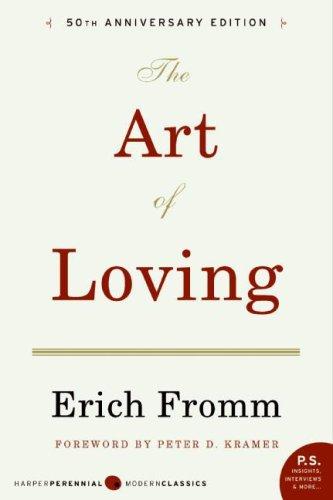
Erich Fromm's 1956 essay on the nature and practice of love remains one of the most profound psychological and philosophical texts ever written on the subject. Fromm's central provocation — that love is not primarily a feeling one has but an art one practices, requiring knowledge, effort, discipline, and concentration — challenges virtually everything modern culture teaches about romantic relationships. He distinguishes love from falling in love, care from dependency, and genuine concern from possessiveness with rare precision. The analysis of the various forms of love — brotherly, motherly, erotic, self-love, and love of God — reveals how each illuminates the others. For therapists and for anyone struggling with relationships, Fromm's insight that our capacity to love another is inseparable from our capacity to love ourselves is both clinically accurate and deeply challenging. A slim volume that repays reading and re-reading across an entire adult life.
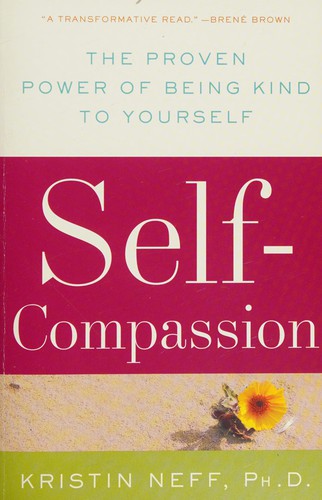
Kristin Neff, the pioneering researcher who brought self-compassion into empirical psychology, makes a compelling case that self-compassion — treating oneself with the same kindness one would offer a good friend — is not self-indulgence but a prerequisite for psychological health, motivation, and genuine achievement. Drawing on fifteen years of research, she shows that self-criticism, which many people believe drives success, actually produces anxiety, depression, and avoidance. Self-compassion, by contrast, provides the emotional safety needed to acknowledge mistakes, learn from failure, and persist through difficulty. The three components — mindfulness, common humanity, and self-kindness — are presented with both scientific rigor and practical exercises. For clients who struggle with perfectionism, shame, or an inner critic that never quiets, this book is often transformative. One of the most important practical psychology texts of the past two decades.
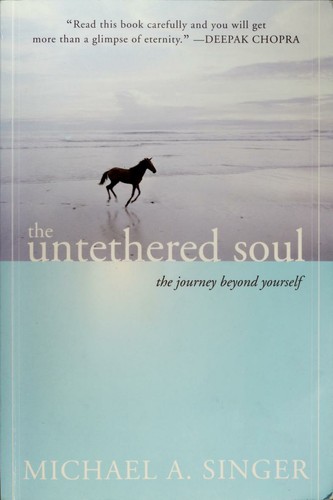
Michael Singer's elegant meditation on consciousness and inner freedom asks a question most people never pause to consider: who is the one who is aware of all experience? By carefully distinguishing the witness — the pure awareness that observes thoughts, emotions, and sensations without being any of them — from the contents of experience, Singer opens a doorway to a radical kind of inner freedom. The book's central teaching is that suffering arises not from events themselves but from our resistance to them, and that the deepest freedom comes from learning to remain open rather than contracting around pain. Singer's writing is unusually clear for a book that touches on profound spiritual territory, making it accessible even to readers with no prior interest in meditation or spirituality. For anyone caught in repetitive thought patterns, anxiety, or the sense of being trapped by their own mind, The Untethered Soul offers both understanding and genuine practical guidance.

Lindsay Gibson's quietly revolutionary work addresses something millions of adults experience but rarely have language for: the particular loneliness of having grown up with parents who were emotionally unavailable, self-absorbed, or incapable of genuine intimacy. Gibson identifies four types of emotionally immature parents — emotional, driven, passive, and rejecting — and shows with clinical precision how each produces characteristic wounds in children: the tendency to over-function, difficulty identifying one's own needs, chronic anxiety, and a deep hunger for connection that adult relationships never quite satisfy. What makes this book exceptional is that it does not simply diagnose the problem but offers a sophisticated framework for healing — not by confronting parents, but by developing what Gibson calls "inwardness": the capacity to connect with one's own authentic self. An essential read for anyone in therapy or doing serious personal development work.

In this psychologically precise guide, Dirk Werner addresses one of the most common yet least discussed dynamics in modern relationships: the subtle and sometimes not-so-subtle tests that partners conduct to assess love, loyalty, and emotional sovereignty. Drawing on his clinical experience as a psychotherapist, Werner explains why people test their partners — the underlying insecurities, attachment wounds, and unmet needs that drive this behavior — and how those being tested can respond with authentic confidence rather than anxiety or compliance. The book is particularly valuable for its insight into emotional sovereignty: the capacity to remain centered in one's own values and self-understanding regardless of external pressure. Werner writes with the warmth of someone who has sat with hundreds of clients navigating exactly these dynamics. For anyone who finds themselves perpetually trying to prove their worth in a relationship, this book offers both understanding and a clear path forward.

Relationships are the arena where personal development is most urgently tested — and most often derailed. In this compact and immediately practical guide, Dirk Werner distills decades of clinical experience into 101 principles that support genuine partnership and mutual growth. What distinguishes this from typical relationship advice is Werner's psychological depth: the rules are not social conventions but observations about how attachment, projection, and unconscious patterns shape couple dynamics. Many principles address the shadow dimensions of relationships directly — the childhood wounds we re-enact, the expectations we project onto partners, the recurring conflicts that signal unfinished inner business. The format makes it highly usable: readers can engage with it sequentially or open it at random and find something relevant to their current situation. An ideal companion for couples in therapy and for individuals committed to doing serious personal development work.

Psychotainment is Dirk Werner's most ambitious exploration of human psychology through the lens of entertainment culture — examining how we reveal our deepest psychological structures through the media we consume, the celebrities we worship, and the dramas we watch obsessively. Werner argues that entertainment is not escapism but a form of shadow engagement: we are drawn to characters and stories that carry the psychological material we have not yet integrated in ourselves. The book is written with the intellectual playfulness of someone who genuinely enjoys ideas, but the psychological analysis is rigorous throughout. For personal development readers, the central insight is that understanding what captivates you — and why — is one of the fastest routes to self-knowledge. Warner's clinical background ensures that the psychological observations are grounded in reality rather than pop-psychology generalization. A genuinely original contribution to both psychology and media studies.

Henry Cloud and John Townsend's foundational work on psychological boundaries has helped millions of people understand why they feel responsible for other people's emotions, why saying "no" provokes guilt, and why certain relationships always seem to drain rather than nourish. The book defines boundaries clearly — they are the lines that define where you end and another person begins — and explores how they develop (or fail to develop) in childhood through the responses of parents and caregivers. Cloud and Townsend draw on both clinical psychology and a Christian framework, though the psychological content is valuable regardless of religious background. The chapters on different relationship contexts — marriage, family of origin, friendships, work — make the concepts concrete and applicable. For anyone who struggles with people-pleasing, chronic over-responsibility, or the inability to protect their own time and energy, this book is a genuine game-changer.

Peter Levine's pioneering work on Somatic Experiencing — the body-based approach to trauma he developed over forty years — begins with an observation from nature: animals in the wild routinely face life-threatening situations but almost never develop the chronic symptoms of trauma that humans do. The difference, Levine shows, lies in the body's natural self-regulation mechanisms, which animals complete through shaking, trembling, and physical discharge, but which humans interrupt through rationalization and shame. Waking the Tiger explains how trauma becomes "frozen" in the nervous system and how gently guided body awareness can complete the interrupted defensive responses and restore natural vitality. For personal development, this book is essential because so much of what limits human potential — chronic contraction, hypervigilance, difficulty with pleasure and spontaneity — is the residue of unprocessed threat responses. Groundbreaking, compassionate, and practically valuable.
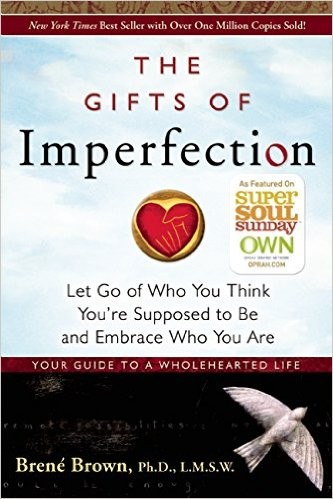
If Daring Greatly is Brené Brown's manifesto, The Gifts of Imperfection is her handbook — a practical guide to living wholeheartedly in a culture that relentlessly pushes perfectionism, productivity, and performance as measures of worth. Brown presents ten guideposts for wholehearted living, each addressing one of the armors people use against vulnerability: perfectionism, numbing, comparison, people-pleasing. What makes this book particularly resonant is Brown's willingness to be her own case study — she writes from her own struggles with these patterns, not from a position of having transcended them. The emphasis on rest, play, creativity, and gratitude as foundational practices rather than luxuries runs counter to much self-optimization culture and carries the weight of genuine research. For anyone who has achieved much but still feels not enough, this book speaks directly to what is actually missing and how to begin finding it.

An interactive gratitude journal grounded in positive psychology research. How daily gratitude practice rewires the brain for optimism, builds emotional resilience, and creates lasting life satisfaction. A practical tool for personal transformation through mindfulness and appreciation.
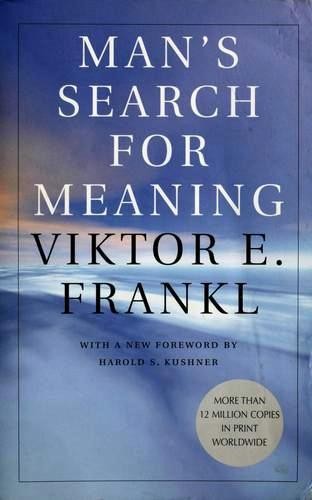
Viktor Frankl's account of his experiences in Nazi concentration camps and the development of logotherapy — his school of meaning-centered psychotherapy — is one of the most important books of the twentieth century. The first section, his memoir of Auschwitz and other camps, is devastating in its honesty and remarkable in its psychological precision: Frankl observes with a clinician's eye what sustained people through unimaginable suffering and what led to psychological collapse. His conclusion — that the last human freedom is the freedom to choose one's attitude toward any given circumstance — has the force of something earned at tremendous personal cost. The second section, introducing logotherapy, argues that the primary human drive is not pleasure (Freud) or power (Adler) but the search for meaning. For personal development, this book provides a foundation that no amount of habit-stacking or mindset training can replace: the question of why, answered from the deepest possible source.