← All Reading Lists
20 Books That Expand How You Understand Consciousness
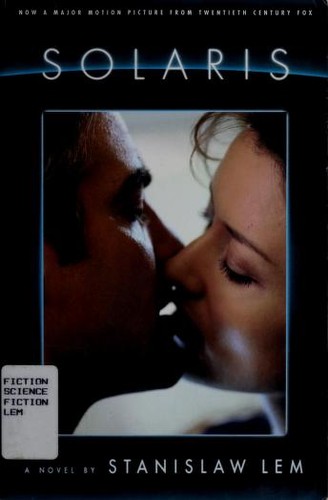
Solaris is the most philosophically honest alien-contact novel ever written: the alien ocean does not communicate, does not negotiate, and cannot be understood — it simply mirrors back the deepest traumas buried in each scientist's unconscious. Lem uses science fiction as a vehicle for pure epistemology, asking whether the human mind can ever truly encounter something genuinely Other. The Solaris ocean is a living inkblot test operating on a planetary scale. As a psychotherapist, I find this novel devastating in its accuracy: consciousness always projects. What we call "contact" is so often collision with our own shadow.
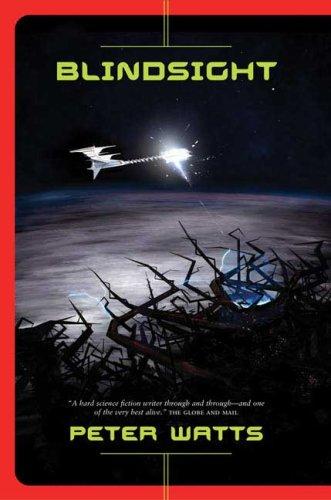
Blindsight is the most unsettling argument in science fiction: consciousness may be an evolutionary dead end, a maladaptive luxury that slows down the processing power needed for survival. Watts builds his case meticulously with real neuroscience, introducing aliens who are supremely intelligent yet completely unconscious — and who cannot understand why we bother being aware. The novel features a protagonist with half his brain removed, a vampire (biologically plausible), and a crew of extreme specialists, all raising the question of what we lose when we optimize the mind. This book will permanently disturb your assumptions about the self.
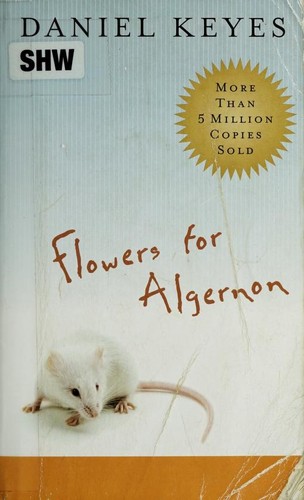
Charlie Gordon's journey from intellectual disability to genius and back again is one of literature's most emotionally devastating explorations of consciousness and identity. Keyes writes the entire novel as Charlie's diary entries, and the prose itself shifts as Charlie's intelligence rises and falls — a formal choice of heartbreaking brilliance. The novel forces us to ask: which Charlie is the real one? And if intelligence changes who we are, what does that say about the continuity of the self? As a psychotherapist, I return to this book whenever I need to remember that intelligence and emotional wisdom are entirely different things.
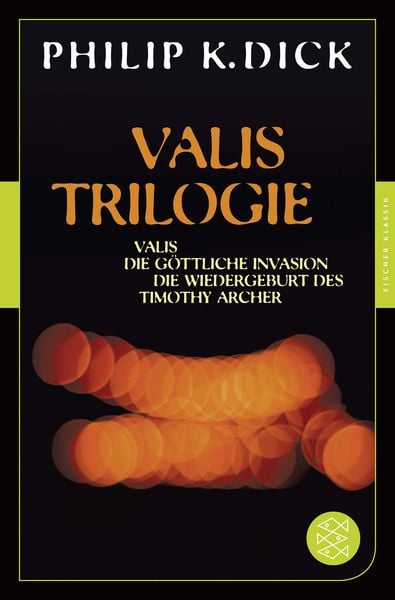
VALIS — Vast Active Living Intelligence System — is Philip K. Dick's most autobiographical and most gnostic novel, based directly on the visionary experiences he had in 1974 when he believed an ancient divine intelligence was beaming information into his mind. Dick splits himself into two characters: "Phil" and "Horselover Fat," allowing him to both inhabit and critique his own mystical breakdown. The novel asks whether gnosis — direct experiential knowledge of the divine — is revelation or psychosis, and refuses to answer cleanly. For readers drawn to gnostic themes, this is the essential text: raw, strange, deeply serious beneath its comedy.
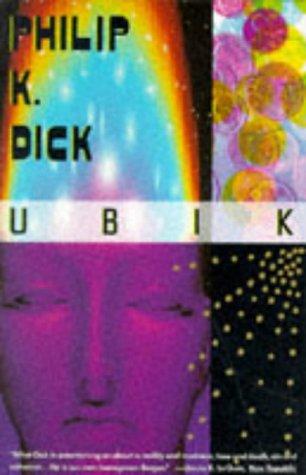
In Ubik, reality itself is unreliable: time runs backwards, products decay into older versions of themselves, and the dead can communicate from a half-life state of residual consciousness. Dick constructs a world where the boundaries between living and dead, real and simulated, are constantly dissolving — and at the center is Ubik, a mysterious substance that temporarily restores consensus reality. The novel is a masterclass in ontological horror, where the deepest fear is not death but the uncertainty of whether one is already dead. Few books have captured the paranoid phenomenology of consciousness unmooring from reality with such precision.
Also interested in gnostic themes and mystical consciousness?
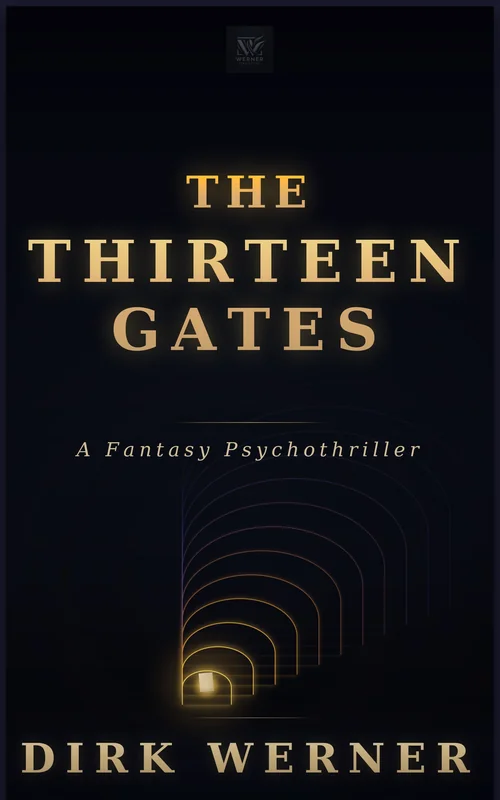
Dirk Werner's novel The Thirteen Gates explores the same territory — thirteen initiatory thresholds between the human and the transcendent.
View The Thirteen Gates →
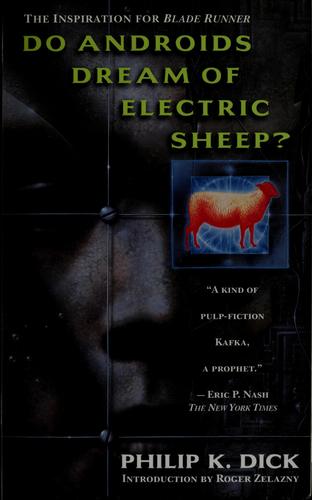
The source material for Blade Runner is far richer and stranger than the film. Dick's central question is not "can androids think?" but "can androids feel empathy?" — and by extension, whether empathy is what makes us human, or merely what makes us think we are. The Voigt-Kampff test, designed to detect androids by measuring empathic response, raises disturbing questions about psychological testing itself. The novel's secondary plot involving Mercerism — a shared empathic religion mediated by technology — adds a layer of theological depth that makes this one of Dick's most complete visions of consciousness, community, and what we owe to other minds.
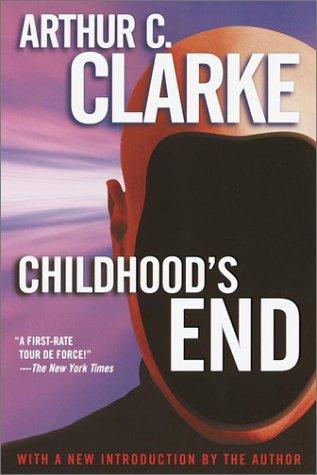
Clarke's masterpiece imagines the end of individual human consciousness as an evolutionary transcendence rather than a tragedy — and yet it reads as deeply tragic. When Earth's children begin to merge into a collective Overmind, leaving behind everything that made them individual human beings, Clarke asks whether transcendence is the fulfillment or the annihilation of the self. The novel is haunted by the image of parents watching their children become something incomprehensible and beautiful. As a psychotherapist, this resonates as a meditation on growth that the previous generation cannot follow, and the grief of being left behind by one's own evolution.
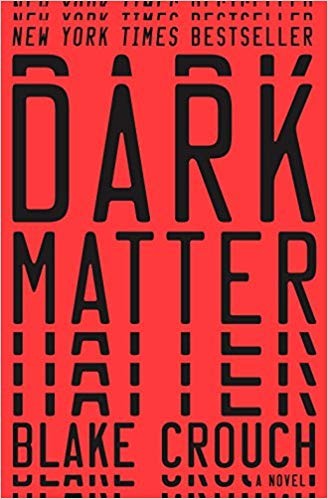
Dark Matter is a quantum-physics thriller that uses the multiverse as a psychological device: if every choice spawns a parallel universe, then who are you? Jason Dessen is kidnapped, drugged, and wakes up in a life he doesn't recognize — a version of his own life where different choices were made. Crouch uses hard science (the many-worlds interpretation is taken seriously) to explore the deepest anxieties about identity, regret, and the roads not taken. The thriller pacing keeps the existential questions moving, but the emotional core — a man fighting through infinite versions of himself to get back to the one life he chose — is genuinely moving.
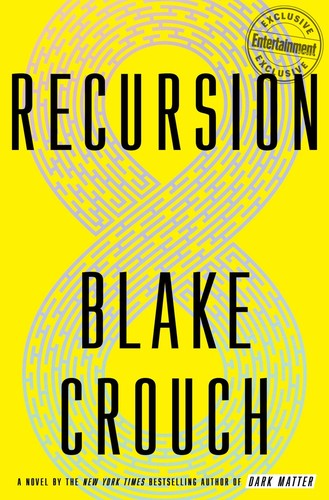
Recursion takes on memory as the architecture of consciousness: a neuroscientist develops a chair that allows people to re-experience and reenter their memories, with the catastrophic side effect that entire timelines begin to fracture and overwrite each other. Crouch is interested in a question that any therapist recognizes immediately: if you could go back and change the worst moment of your life, would you? And what would that do to the person you became by living through it? The novel escalates brilliantly from personal grief to civilizational collapse, all while keeping its emotional stakes — loss, love, and the cost of refusing to let go — at the center.
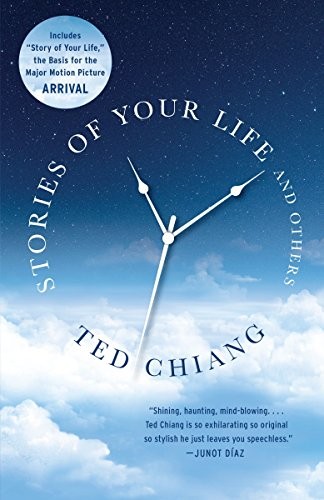
Ted Chiang is the most philosophically rigorous short fiction writer working today, and this debut collection contains some of the finest meditations on consciousness in all of science fiction. "Story of Your Life" (the basis for the film Arrival) imagines how learning an alien language restructures human time perception from sequential to simultaneous — a profound thought experiment about how language shapes consciousness. "Understand" follows a man whose intelligence is amplified to superhuman levels and who begins to perceive reality as an integrated gestalt. Each story in this collection is a precision instrument for examining a single aspect of mind or perception, with no wasted words.
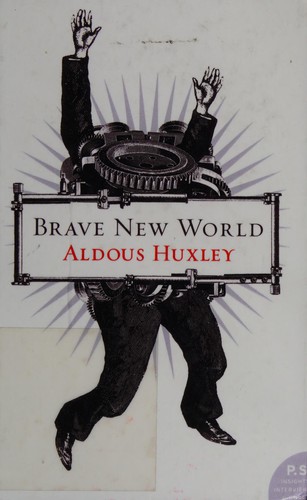
Huxley's dystopia is not about oppression through fear but through pleasure — a world where soma, a pharmacological happiness drug, has eliminated suffering, depth, and meaning simultaneously. Written by a man who would later experiment extensively with mescaline and write "The Doors of Perception," Brave New World asks what we lose when altered states are industrialized and dispensed by the state rather than sought individually. The Savage's insistence on the right to suffer, to feel, to be fully conscious — even of pain — is one of literature's great defenses of unmedicated awareness. This novel has aged into a warning that feels more relevant each decade.
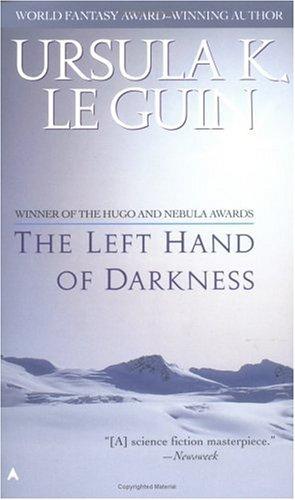
Le Guin's Hugo and Nebula Award-winning novel imagines a planet whose inhabitants have no fixed biological sex, cycling between male and female states monthly. But this is not primarily a novel about gender — it is a novel about perception: how deeply our categories of thought shape what we can see and think. The Ekumen envoy Genly Ai struggles throughout to perceive the Gethenians as they actually are rather than through the filter of his own gendered consciousness. Le Guin writes with an anthropologist's precision and a poet's subtlety, making this a masterwork of defamiliarization — using science fiction to reveal the invisible structures of our own minds.
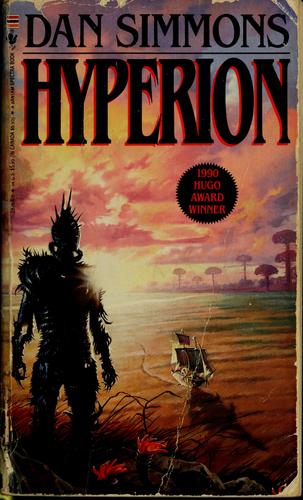
Structured as a Canterbury Tales of the far future, Hyperion weaves together seven pilgrims' stories, each illuminating a different facet of consciousness: the poet who trades his talent for an implanted AI muse, the scholar whose daughter ages backwards through time, the detective navigating the boundary between human and artificial mind. The Shrike — a creature that exists across multiple time streams simultaneously — embodies a form of consciousness so alien it approaches divinity or nightmare. Simmons combines literary ambition with genuine scientific speculation about AI consciousness and the nature of time to create one of science fiction's richest philosophical tapestries.
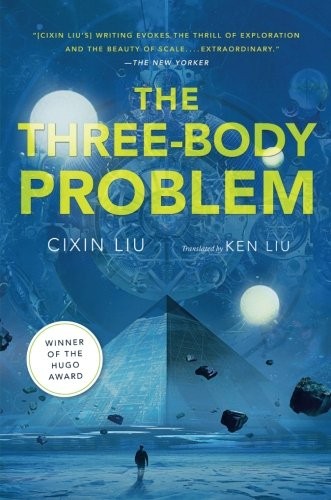
Liu Cixin's trilogy opener begins during China's Cultural Revolution — a setting where ideological possession destroys individual consciousness — and expands to encompass the entire fate of intelligent life in the universe. Liu proposes the "Dark Forest" theory of cosmic consciousness: any sufficiently advanced civilization must inevitably become paranoid, predatory, and silent, because trust between civilizations is impossible to establish. The novel is a meditation on how collective consciousness at civilizational scale operates by entirely different logic than individual ethics. Opening this book feels like watching your own conceptual framework dissolve in the face of something genuinely vast.
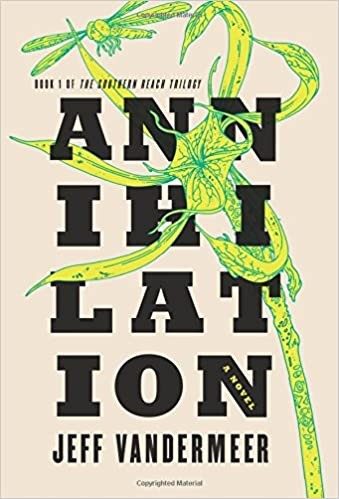
Area X is a zone where normal reality has been replaced by something that looks like nature but operates by entirely different rules — and what it does to human consciousness is the novel's true subject. VanderMeer's biologist narrator is already unusually self-contained and perceptually hyper-attentive before she enters Area X; what the zone does is amplify and then dissolve her boundaries of self. Annihilation reads like a precision account of dissociation, ego dissolution, and the terror of losing the category of "self" while remaining observant enough to document the process. This is one of the finest literary evocations of altered perception in contemporary fiction.
Piranesi inhabits a house of infinite halls, vast statues, and tidal seas — a world that only gradually reveals itself to be a dissociated mind's refuge from an unbearable reality. Clarke writes entirely from inside Piranesi's consciousness, and his voice — curious, joyful, meticulously observant — is one of the most distinctive in recent fiction. The novel is a masterpiece of unreliable interiority: the reader understands what is happening long before Piranesi does, and watching his awareness slowly reconstruct itself is both moving and philosophically rich. Few novels have captured dissociation's strange mercy — the way consciousness protects itself by creating a more livable world — with such compassion and beauty.
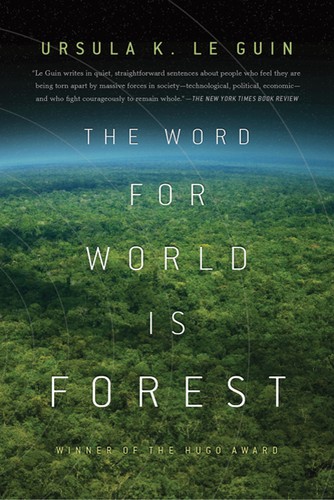
Le Guin's novella imagines a species — the Athsheans — who have fully integrated dream consciousness into waking life, moving fluidly between dreaming and waking states as a natural part of daily existence. When human colonizers arrive and begin enslaving the Athsheans, they unknowingly attack a civilization whose entire spiritual and psychological architecture is built on the dream. The violence does not just destroy bodies; it shatter a mode of being in the world. Written as an explicit response to the Vietnam War, this novella connects consciousness studies to political philosophy in ways that feel more urgent than ever: who controls our states of awareness controls us entirely.
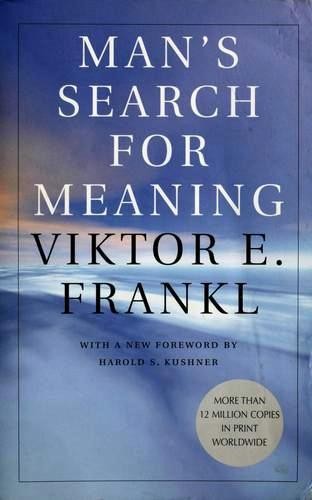
Not science fiction in the genre sense, but essential to any reading list about consciousness and transcendence: Frankl's account of surviving Auschwitz through the discovery that even in the most extreme suffering, consciousness retains the freedom to choose its orientation toward meaning. This is not comfort literature — Frankl is a rigorous psychiatrist describing the phenomenology of extreme states. His logotherapy is grounded in the observation that consciousness is always consciousness of something, and that finding that "something" — a purpose, a person, a task — makes survival not just possible but meaningful. Every therapist should read this; every reader interested in what consciousness can endure should read it.
My own novel belongs on this list because it emerged from the same questions that drew me to all the books above: what lies at the boundary of ordinary consciousness? The Thirteen Gates follows a protagonist moving through thirteen initiatory thresholds — each a different mode of encountering the transcendent, drawn from gnostic traditions, depth psychology, and my own years of work as a psychotherapist with patients at the edges of ordinary experience. The novel takes seriously the possibility that what mystics have described across cultures is not delusion but a genuine, if dangerous, form of perception. It is fiction that thinks — about gnosis, about what we suppress, and about what waits on the other side of the gates we are afraid to open.
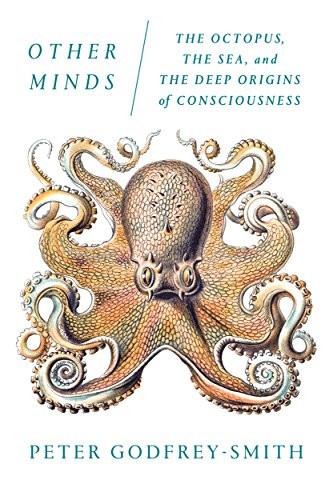
Godfrey-Smith is a philosopher of mind who is also a scuba diver, and this book grew from his underwater encounters with octopuses — animals with a radically different evolutionary architecture for consciousness, with neurons distributed through their arms rather than centralized in a brain. The octopus is the closest thing to a genuinely alien mind that we can actually observe and interact with on Earth. This non-fiction work belongs alongside the fiction on this list because it reads with the wonder of the best science fiction, while being grounded in rigorous philosophy. After reading it, you will never again assume that consciousness must take the form it has taken in you.
Why These Books Matter
Consciousness is the most intimate thing we have and the least understood. We inhabit it every waking moment — and yet neuroscience, philosophy, and psychology cannot agree on what it is, where it comes from, or whether it is real in the way we assume it to be. Science fiction has always been the genre most willing to take these questions seriously, because it can build thought experiments at the scale they require: alien civilizations, alternative timelines, posthuman architectures of mind.
As a psychotherapist, I have spent my professional life in conversation with consciousness in its most vulnerable states — dissociated, grieving, fractured, transforming. The books on this list have all, in different ways, sharpened my understanding of what I encounter in that work. They are not escapism. They are some of the most serious explorations of the inner life that exist in any literary form.
Start anywhere. But if you want the book that sits closest to all of these at once — mystical, gnostic, grounded in depth psychology, and genuinely strange — begin with The Thirteen Gates.