← All Reading Lists
Books 1–5: The Foundations of Trauma Understanding
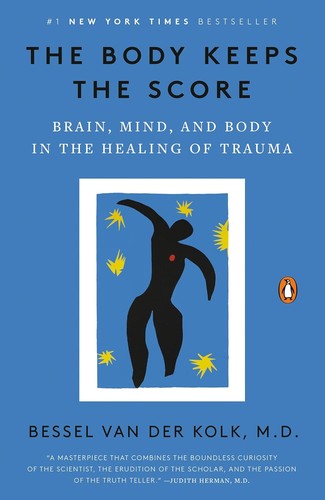
Bessel van der Kolk's landmark work has fundamentally reshaped how clinicians and the general public understand trauma — not as a psychological wound stored in memory, but as a physiological experience encoded in the body itself. Drawing on decades of research and clinical work at the forefront of trauma studies, van der Kolk demonstrates that traumatic experience reorganizes the brain, alters the nervous system, and disrupts the body's basic regulatory functions in ways that conventional talk therapy often fails to reach. The book ranges across neuroscience, developmental psychology, yoga, EMDR, theater, and neurofeedback, mapping a terrain of healing that is broader and more creative than many readers expect. What makes this book essential is its compassion: van der Kolk never reduces trauma survivors to their symptoms, but consistently situates their struggles within the context of real human experiences that overwhelmed their adaptive capacities. A book that has genuinely changed how millions of people understand their own suffering — and, more importantly, their own capacity to heal.
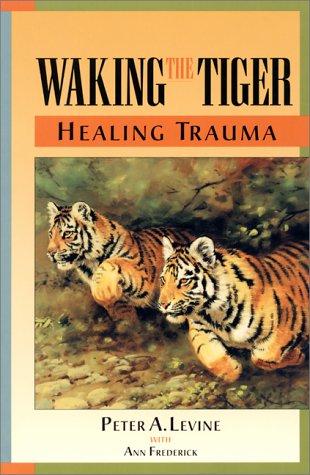
Peter Levine's foundational work on Somatic Experiencing begins with an elegant observation: animals in the wild routinely face life-threatening situations but almost never develop the chronic trauma symptoms that plague humans. The difference, Levine demonstrates, lies in the body's natural self-completion mechanisms — the shaking, trembling, and physical discharge through which animals discharge survival energy after threat. Humans interrupt these processes through intellect and social conditioning, leaving trauma frozen in the nervous system as chronic tension, hypervigilance, and dissociation. Waking the Tiger offers a profoundly hopeful model: trauma is not a life sentence but an incomplete biological process that, given the right conditions, can be gently completed. Levine's writing is accessible and richly illustrated with case examples, making the physiological mechanics of trauma comprehensible without reducing their complexity. For anyone seeking to understand why the body holds what the mind cannot process, this book offers both explanation and genuine pathways forward.
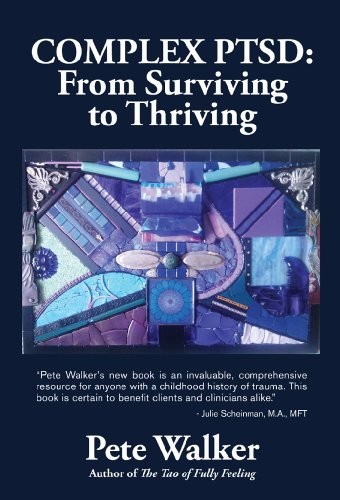
Pete Walker's self-help guide fills a critical gap: while much trauma literature focuses on single-incident PTSD, Walker addresses the more common but less recognized complex PTSD that results from prolonged childhood abuse, neglect, or emotional abandonment. Writing from both his clinical experience and personal recovery from severe childhood trauma, Walker brings an authenticity and precision to his subject that purely academic texts cannot match. His model of the four F-responses — fight, flight, freeze, and fawn — has become widely used as a framework for understanding how early trauma shapes adult personality and coping patterns. The book covers emotional flashbacks (the largely unrecognized phenomenon of being suddenly flooded by the emotional states of past trauma without explicit memory content), inner critic dynamics, grieving the childhood that was never received, and the long developmental work of recovering a sense of self. Practical, compassionate, and grounded in hard-won experience, this is the book many CPTSD survivors describe as the first time they truly felt understood.
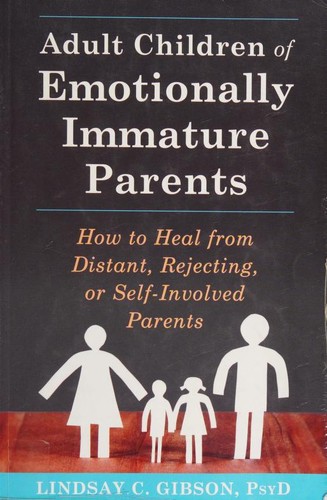
Lindsay Gibson's quietly revolutionary book addresses one of the most pervasive and least recognized sources of childhood trauma: growing up with parents who were not abusive in any conventional sense, but who were emotionally unavailable, self-centered, or simply incapable of genuine empathic attunement. Gibson describes four types of emotionally immature parents — emotional, driven, passive, and rejecting — and traces how their patterns create in their children a characteristic loneliness, self-doubt, and compulsive caretaking that persists into adult relationships. What distinguishes this book is its refusal to simply blame parents while also refusing to minimize the real developmental harm of emotional neglect. Instead, Gibson offers a detailed map of the survivor's psychology and concrete strategies for reclaiming authenticity and building the emotional skills that were never modeled. Many readers report a profound sense of validation on first reading — the experience of finally having words for a pain that had always felt inexplicable and shameful. An essential read for anyone whose childhood felt subtly wrong without being obviously catastrophic.
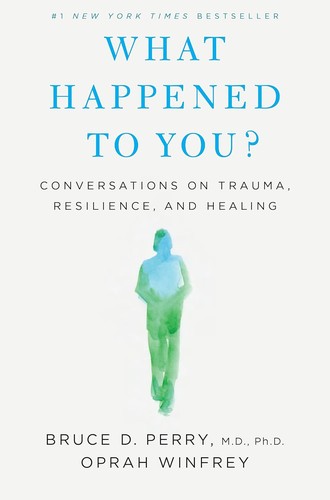
The title itself encodes a radical reframing: instead of "What is wrong with you?" — the implicit question behind so much clinical and social judgment — Bruce Perry and Oprah Winfrey ask what happened. This shift from deficit to history, from pathology to response, is the book's central contribution and its deepest gift to readers who have spent years feeling fundamentally broken. Perry, a leading developmental neuroscientist, and Winfrey, who speaks from her own experience of childhood trauma, construct their exploration as a conversation — accessible, personal, and scientifically grounded in equal measure. The book explains how early adverse experiences literally shape developing neural networks, why some people are more resilient than others, and why healing requires not just insight but relational experience and embodied safety. What makes this book particularly powerful is its implicit message: your symptoms make complete sense given what you lived through. Understanding that is not an excuse but a foundation — the starting point from which genuine change becomes possible.
Books 6–10: Depth, Systems, and the Inherited Past
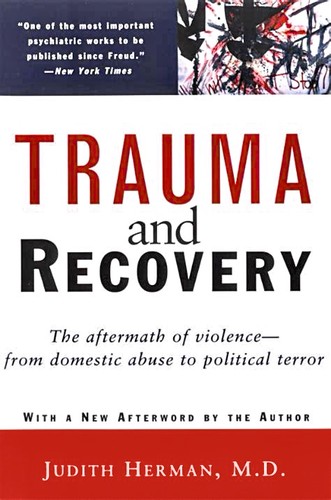
Judith Lewis Herman's 1992 masterwork remains one of the most important books in trauma literature — a text that helped establish the very legitimacy of trauma as a clinical and political reality. Herman draws parallel lines between combat veterans, political prisoners, and survivors of domestic and sexual violence, demonstrating that the symptoms we now call PTSD are the predictable responses of a normal human being to abnormal circumstances. Her three-stage recovery model — establishing safety, reconstructing the trauma story, and restoring connection — has become a cornerstone of trauma therapy. But Herman's contribution is not only clinical: she insists that trauma must be understood in its social and political context, that the impulse to silence survivors is systemic and serves the interests of perpetrators. This book carries the rare quality of being both scientifically rigorous and morally courageous. It honors the complexity of trauma without pathologizing those who carry it, and it argues compellingly that healing is not merely personal but inherently relational and, ultimately, political.
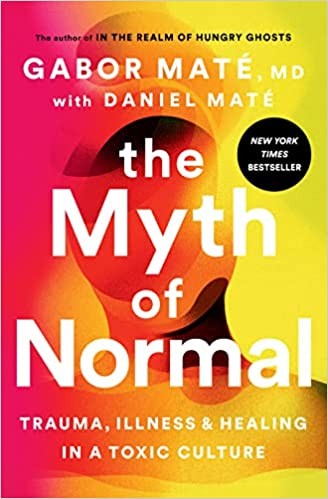
Gabor Maté's most comprehensive work argues that what we call normal in Western culture — the chronic stress, disconnection, and suppression of authentic self — is not normal at all, but a pathological adaptation to a pathological society. Drawing on his decades of work with addiction, chronic illness, and trauma, Maté weaves together neuroscience, epigenetics, developmental psychology, and cultural criticism to make a radical claim: that most chronic illness, mental and physical, is the body's attempt to cope with emotional pain that has been denied, suppressed, or never adequately met. The concept of "the myth of normal" is the insight that our epidemic of suffering is not an aberration but a predictable consequence of how we raise children, structure work, and organize communities. For trauma survivors, this book is profoundly validating — it situates individual suffering within systemic conditions and challenges the shame that attaches to vulnerability. Maté writes with warmth, intellectual rigor, and the humility of someone who has applied his own insights to his own healing. A genuinely important book for our time.
Mark Wolynn draws on the emerging science of epigenetics and the clinical work of transgenerational trauma therapy to present a compelling case: that the fears, symptoms, and self-sabotaging patterns we cannot trace to our own lives may have roots in the unresolved traumas of our parents, grandparents, or earlier ancestors. Wolynn's "Core Language Approach" offers a practical method for identifying the phrases, images, and physical sensations that act as bridges to inherited trauma, then transforming the relationship to them through a structured healing process. The book combines clinical case studies, neuroscientific research, and therapeutic exercises in a way that is both intellectually credible and practically accessible. For readers who have worked extensively on themselves without resolving certain persistent symptoms, Wolynn's framework can be genuinely revelatory — offering an explanation for patterns that have always seemed to arise from nowhere and a path toward healing that does not require retrieving memories that were never personally formed. A book that expands the definition of what trauma is and where it lives.
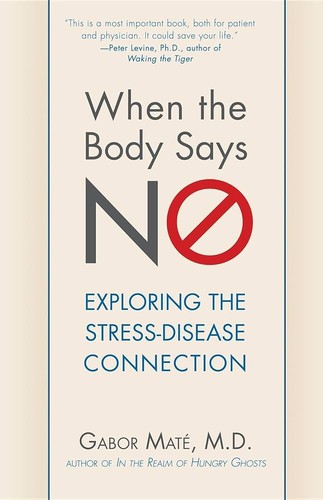
In this earlier and equally important work, Gabor Maté examines the relationship between chronic illness and repressed emotion — specifically the link between the inability to say "no" to others and the eventual collapse of the body's own defenses. Through extensive case studies of patients with multiple sclerosis, ALS, cancer, and other serious conditions, Maté argues that the repression of authentic emotion — particularly anger and grief — and the chronic subordination of personal needs to others' expectations are significant risk factors for autoimmune and inflammatory diseases. Drawing on psychoneuroimmunology and attachment theory, he traces how early experiences teach certain children that the price of love is the suppression of authentic self, and how this adaptation persists into adult patterns of compulsive giving and boundary collapse. The book does not blame the ill for their illness — it honors the enormous adaptive intelligence behind these patterns while illuminating their physiological cost. For anyone whose body seems to be carrying what their life situation cannot accommodate, Maté offers both understanding and a path toward reclaiming the "no" that the body has been forced to speak.
Completing a kind of unofficial Maté trilogy on trauma's effects, Scattered Minds reframes ADHD not as a genetic brain disorder but as a developmental response to early emotional stress — a compensatory adaptation that made sense in a particular environment but which creates difficulties in different contexts. Writing as someone with ADHD himself, Maté brings unusual personal depth to his analysis, tracing how early attachment disruption interferes with the neurological development of self-regulation, attention, and emotional processing. This reframing has profound implications for treatment: rather than simply managing symptoms, healing ADHD means addressing the underlying emotional and relational wounds that shaped the nervous system. For adults who have struggled with attention, impulsivity, or emotional dysregulation — and who have often internalized narratives of laziness or moral failure — Scattered Minds offers a compassionate alternative understanding that opens space for genuine self-acceptance. The book also challenges parents and educators to examine how environments of chronic stress, disconnection, and pressure contribute to the development of these patterns, shifting the conversation from individual deficit to relational and social responsibility.
Dirk Werner's Books on Emotional Healing
Three of Dirk Werner's books appear in this reading list — on inner struggles and emotional resilience, overcoming self-sabotage, and empathetic support through mental illness. All available as Kindle books.
View All Books by Dirk Werner
Books 11–15: Tools, Methods, and Featured Works
Francine Shapiro, the developer of EMDR (Eye Movement Desensitization and Reprocessing), writes here not for clinicians but for general readers — offering a practical guide to understanding how unprocessed memories drive present-day emotional reactions and what can be done about it. Shapiro's central insight is that many of our current emotional triggers, self-limiting beliefs, and relationship patterns are directly linked to earlier experiences that were never fully processed by the brain and thus remain "stuck" in their original emotional intensity. The book includes self-guided exercises drawing on EMDR principles, making it one of the more practically accessible trauma self-help books available. More importantly, it provides a coherent model for why we seem to repeat patterns we consciously want to change — a question that has confounded therapy clients and frustrated therapists for generations. Shapiro's writing is clear and clinically grounded without being jargon-heavy, making this book valuable both for trauma survivors seeking to understand their own experience and for people who simply want to understand why the past continues to shape the present so powerfully.
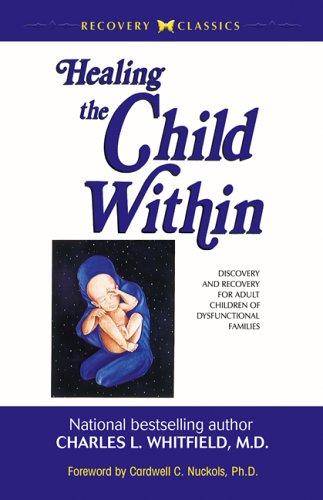
Charles Whitfield's work was among the first to bring the concept of the "inner child" — the authentic self that was suppressed, shamed, or abandoned in dysfunctional family systems — into accessible therapeutic language. Written primarily for adult children of alcoholics and other dysfunctional families, the book traces how co-dependence, shame, and the loss of authentic selfhood develop in environments where children's emotional needs are chronically unmet. Whitfield distinguishes between the "true self" (the child within) and the "false self" (the adaptive persona constructed for survival), and offers a model for gradual recovery that involves grieving, boundary work, and the slow process of learning to trust one's own perceptions and feelings. While some of its language reflects the recovery movement of its era, the core insights remain clinically relevant and deeply resonant for many readers. For those whose childhood required the suppression of authentic feeling in order to maintain family stability, this book offers both a framework for understanding what happened and a compassionate path toward reclaiming what was lost.
Trauma recovery is rarely a battle with external forces — it is a battle within: with the inner voices that say you are broken, with the parts of yourself that were shaped by adversity to protect you but now hold you back, and with the nervous system's persistent insistence that the danger has not passed. In The Battle Within, Dirk Werner draws on his clinical experience as a psychotherapist to map the inner landscape of trauma survivors with precision and compassion. He addresses the core challenge of emotional resilience: not the absence of pain, but the capacity to remain present with it, to move through it rather than around it, and to integrate what was once overwhelming into a coherent sense of self. Werner's approach is grounded in the understanding that inner struggle is not pathology but the very mechanism of growth — that the parts of us that resist, collapse, or fight back are, in each case, carrying something important that demands acknowledgment. For those navigating the long and nonlinear path of recovery from adverse experiences, this book offers both a map and genuine companionship for the journey.
Emotional resilience and recovery from inner struggle
View Book →
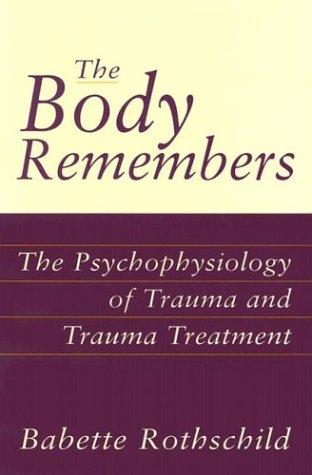
Babette Rothschild's contribution to somatic trauma therapy is both theoretically sophisticated and highly practical — a book written primarily for therapists but accessible to any reader seriously engaged with understanding the body's role in trauma. Rothschild bridges the gap between traditional talk therapy and somatic approaches, arguing that effective trauma treatment requires attending to the body's physiological state rather than simply processing narrative content. Her concept of the "trauma brakes" — interventions that help regulate arousal before, during, and after trauma processing — has become an important clinical tool. The book explains how traumatic memory differs from ordinary memory, why trauma survivors sometimes seem to relive rather than remember, and how the therapist's own body and regulatory capacity affect the client's healing process. For trauma survivors seeking to understand their own experience, The Body Remembers offers a precise and compassionate account of why certain triggers produce overwhelming physical reactions and how working with the body — rather than trying to override it through willpower or insight — is often the most direct path to lasting relief.
Self-sabotage is one of the most misunderstood legacies of trauma. What appears from the outside — and often feels from the inside — as inexplicable self-destruction is, in clinical reality, a coherent adaptive strategy: a set of behaviors, beliefs, and emotional patterns that were shaped in adverse early environments to manage unbearable feelings, avoid intolerable risks, or maintain relational connections on which survival once depended. In Selbstsabotage überwinden, Dirk Werner maps the mechanisms by which traumatic experience encodes itself as self-limiting behavior — the unconscious rules that say "I don't deserve success," "closeness is dangerous," or "if I try and fail, it confirms what I have always feared about myself." Drawing on his clinical experience as a psychotherapist, Werner guides readers through the process of identifying their own sabotage patterns, tracing them to their origins in adverse experience, and developing the internal resources needed to break the cycle. Overcoming self-sabotage, he argues, is not a matter of willpower but of healing — of addressing the wound beneath the pattern so that the nervous system no longer needs the protection that the sabotage once provided. An essential companion for trauma survivors who have found that insight alone does not change behavior.
Breaking trauma-rooted self-sabotage patterns
View Book →
Books 16–20: Recovery, Resilience, and Coming Home
Jonice Webb introduces the concept of Childhood Emotional Neglect (CEN) — a form of subtle but profound trauma that results not from what parents did, but from what they consistently failed to do: notice, validate, and respond adequately to their child's emotional experience. Because CEN involves an absence rather than an event, it leaves adults who experienced it with a particular bewilderment: they cannot point to anything specifically wrong with their childhood, yet they carry persistent feelings of emptiness, disconnection, and self-alienation. Webb's contribution is to name and map this invisible wound with clarity and compassion. She identifies the characteristic markers of CEN — difficulty identifying and expressing feelings, a pervasive sense of being different or disconnected, self-directed anger and low self-compassion — and offers concrete therapeutic exercises for gradually building the emotional skills that were never taught. For readers who have always sensed that something important is missing without being able to identify what, Running on Empty provides both the diagnosis and a credible path toward filling the void that emotional neglect leaves behind.
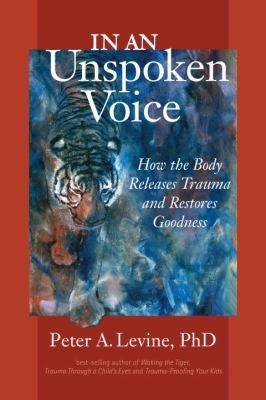
Peter Levine's second major work is a more comprehensive and theoretically developed extension of the Somatic Experiencing model introduced in Waking the Tiger. Drawing on evolutionary biology, neuroscience, and clinical experience, Levine argues that the body possesses an innate wisdom for self-healing — one that humans share with all mammals — but that can be accessed only by learning to work with, rather than against, the body's spontaneous impulses. The book explores how trauma disrupts the continuous flow of sensation, movement, and emotion that constitutes healthy organismic functioning, and how therapeutic approaches that support the body's own corrective movements can restore that flow. Levine's concept of "pendulation" — the rhythmic oscillation between expanding and contracting states that underlies healing — offers a practical framework for understanding why healing is never linear but always cyclical. For clinicians and trauma-informed readers, this book provides a rich theoretical foundation for somatic approaches. For general readers, it offers a profound reassurance: that the body is not the site of permanent damage, but the source of its own healing capacity, waiting to be engaged with skill and patience.
Mental illness rarely affects only the person who carries the diagnosis. Partners, family members, and close friends of those living with depression, anxiety, PTSD, or other psychological conditions often find themselves navigating a second set of challenges: how to offer genuine support without losing themselves, how to understand what their loved one is experiencing without being consumed by it, and how to remain present through the long and often nonlinear process of recovery. In Gemeinsam den Weg gehen, Dirk Werner draws on his clinical experience as a psychotherapist to offer a guide for those who accompany others through mental illness — written with the understanding that empathy and knowledge together create conditions for healing that neither can achieve alone. Werner explains how mental illness disrupts the relational field around the sufferer, what supportive presence actually looks like in practice, and how the act of truly understanding another person's inner world is itself a therapeutic force. For those whose loved ones are navigating trauma, depression, or psychological crisis, this book offers both the conceptual framework to make sense of what is happening and the human warmth to sustain the journey alongside them.
Empathetic companionship through mental illness and recovery
View Book →
Nadine Burke Harris, California's first Surgeon General, built her practice in one of San Francisco's most underserved communities and made a discovery that would shape her career: that Adverse Childhood Experiences (ACEs) — including abuse, neglect, household dysfunction, and poverty — were directly measurable predictors of adult health outcomes across a remarkable range of conditions, from heart disease and cancer to depression and autoimmune disorders. The Deepest Well is her account of that discovery, the science behind it, and her passionate advocacy for making ACE screening a standard component of pediatric care. Burke Harris writes with the clarity and moral urgency of someone who has watched preventable suffering accumulate over decades of clinical practice. The book translates complex neuroendocrine science — how chronic childhood stress dysregulates the HPA axis, the immune system, and cellular aging — into language accessible to any interested reader. More than a medical text, it is a public health argument: that addressing childhood trauma is not a luxury but a necessity, and that the cost of not doing so is carried in bodies, communities, and healthcare systems for generations.
John Bradshaw's Homecoming sits at the intersection of inner child work, family systems theory, and developmental psychology, offering a structured guide to recovering and healing the wounded inner child. Published in 1990, it predates much of the neuroscience that now supports its clinical intuitions, but its core insight remains powerfully relevant: that many adults carry within them a cast of frozen child-selves from various developmental stages — each holding the wounds, shame, and unmet needs of that period — and that healing requires consciously returning to these stages with adult resources and compassion. Bradshaw provides stage-by-stage exercises for connecting with and healing the infant, toddler, preschool, school-age, adolescent, and young adult aspects of the inner child, drawing on psychodrama, visualization, and inner dialogue. For those accustomed to more neurobiologically oriented trauma literature, Bradshaw's approach may initially feel different in register, but the underlying model of developmental arrest and reparative re-parenting is clinically coherent and practically effective. A classic of the healing genre that has brought genuine relief to generations of trauma survivors — and a fitting conclusion to this reading list's journey from the biology of trauma to the recovery of the self.
Final Thoughts
Trauma healing is not a destination but a process — one that moves not in a straight line but in widening spirals, returning to familiar territory with ever-greater capacity for integration. The twenty books in this list represent different entry points into that process: some begin with the nervous system, some with narrative, some with the family system, some with the inherited past. No single book is sufficient, and no single approach works for everyone.
What unites the best trauma literature — and what I have tried to select for here — is the refusal to pathologize the survivor. Every book on this list begins from the premise that trauma symptoms are intelligent adaptations to overwhelming experience, not signs of weakness or disorder. Understanding that is not just consolation. It is the foundation on which genuine healing is built.
If you are new to this subject, I would suggest beginning with either van der Kolk's The Body Keeps the Score for a comprehensive overview, or Walker's Complex PTSD if childhood emotional wounds feel most central to your experience. From there, let your own resonance guide you.