

Attachment theory, originally developed by John Bowlby and extended by Mary Ainsworth, found its popular breakthrough with this landmark book. Levine, a neuroscientist, and Heller, a psychologist, translate decades of academic research into a readable, immediately applicable guide to understanding why we behave the way we do in romantic relationships. The central insight is both simple and revelatory: adults, like infants, have distinct attachment styles — anxious, avoidant, or secure — and these styles powerfully determine how we seek closeness, respond to conflict, and regulate emotional distress within partnerships. Understanding your own style and that of your partner transforms apparently irrational jealousy and emotional withdrawal into comprehensible, even predictable patterns. For anyone who has ever felt consumed by relationship anxiety or puzzled by a partner's emotional unavailability, this book provides both explanation and a practical path toward more secure connection. A genuine paradigm shift for how we understand love.

Jealousy is one of the most destructive and least understood forces in human relationships — and yet it is almost never simply about what it appears to be about. In this psychologically precise guide, Dirk Werner draws on his clinical experience as a psychotherapist to decode the deeper roots of jealous behavior: attachment insecurity, unresolved childhood wounds, and the projection of one's own shadow material onto a partner. Werner neither moralizes nor simplifies. He explains how jealousy patterns develop, how they sustain themselves, and — crucially — how the partners of jealous individuals can respond in ways that protect their own psychological wellbeing without inflaming the situation further. The book also illuminates the self-revealing dimension of jealousy: what our reactions to envious behavior expose about our own inner world. Compact, clinically grounded, and written with rare empathy for all parties involved, this is essential reading for anyone navigating the emotional complexity of jealousy in close relationships.

Few books have had as widespread an impact on how couples understand their emotional needs as Gary Chapman's deceptively simple framework. Chapman, a marriage counselor with decades of practice, observed that people express and receive love in fundamentally different ways — through words of affirmation, acts of service, receiving gifts, quality time, or physical touch. When partners speak different love languages, they can genuinely love each other yet consistently fail to make the other feel loved, leading to cycles of unmet expectation and resentment that easily feed jealousy and insecurity. The framework is not psychologically complex, but its practical utility is extraordinary. Couples who identify their primary love languages report significant improvements in relationship satisfaction almost immediately. The book is at its strongest when showing how mismatched love languages create the emotional starvation that drives so much relationship conflict. An essential starting point for any couple seeking to understand why good intentions so often fall short.

This spiritual romance novel explores the shadow dimensions of deep attachment with rare psychological honesty. Werner's story of love, loss, and the soul's journey across lifetimes works simultaneously as a gripping narrative and as an extended meditation on the unconscious dynamics that govern romantic relationships. The protagonist's arc mirrors the classical stages of emotional transformation — from the initial bliss of projection-based love through the painful confrontation with reality and ultimately toward a more conscious, resilient form of partnership. Werner weaves clinical insights into the story so organically that readers frequently report feeling understood at a depth that non-fiction guides rarely achieve. The novel addresses jealousy, abandonment fear, and obsessive love not as character flaws but as comprehensible responses to deep psychological wounds — and models a path toward healing that is as emotionally honest as it is uplifting. Fiction that functions as genuine self-knowledge, without ever announcing itself as such.

Sue Johnson is the creator of Emotionally Focused Therapy (EFT), one of the most rigorously researched and clinically effective approaches to couples therapy in existence. "Hold Me Tight" is her definitive guide for general readers, translating the principles of EFT into seven specific conversations that couples can have to rebuild emotional connection and break the destructive cycles — demand-withdrawal, protest behavior, jealousy spirals — that erode even initially strong partnerships. Johnson's central argument is that most relationship conflict is at its root an attachment cry: a desperate signal that our emotional bond feels threatened. Understanding this reframes jealousy not as a character defect but as a predictable response to perceived disconnection. The book's case studies are vivid, its exercises practical, and Johnson's warmth as a clinician permeates every page. For couples in distress or anyone seeking to understand the emotional architecture of lasting intimacy, this is among the most important books ever written on the subject.

Relationships thrive or fail in the daily texture of small interactions — the way disagreements are handled, needs are communicated, and emotional space is negotiated. In this compact yet psychologically rich guide, Dirk Werner distills decades of clinical experience into 101 concrete principles for couples who want to move from habitual conflict toward genuine partnership. What elevates this book above standard relationship advice is Werner's insistence on psychological honesty: the rules are not social niceties but observations about how attachment needs, childhood templates, and unconscious projections shape everyday couple dynamics. Many principles address the emotional roots of jealousy directly — the insecurity that seeks reassurance through control, the projection that reads threat where none exists, the communication failures that breed distrust. The format allows both sequential reading and targeted use: open to any page and find something clinically grounded and immediately applicable. An unusually intelligent and practical resource for couples committed to long-term relational health.
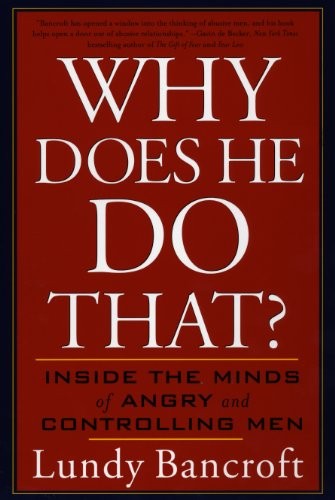
Lundy Bancroft spent two decades working with abusive men as a counselor and researcher, and what he learned fundamentally contradicts most popular assumptions about why controlling behavior occurs in relationships. This book is essential for anyone who has experienced — or witnessed — possessive jealousy escalating into emotional manipulation or control. Bancroft demonstrates that the roots of abusive jealousy are not mental illness, addiction, or childhood trauma in any simple sense, but a deeply entrenched set of attitudes about entitlement, ownership, and the devaluation of partners. His portrait of the various types of controlling men is unnervingly precise, and his advice for partners — how to recognise patterns early, how to protect themselves, what actually helps and what does not — is grounded in hard-won clinical reality rather than wishful therapeutic optimism. A challenging read that has helped millions of people understand and escape dynamics that could otherwise last decades. Indispensable for professionals and lay readers alike.

Heartbreak is one of the most common and most poorly understood forms of psychological suffering — and it is always, at some level, an event that touches our deepest attachment structures. When a relationship ends, what hurts most is often not merely the loss of the other person but the sudden confrontation with parts of ourselves we had projected onto them: our hopes, our sense of worth, our illusions about security. Dirk Werner's guide to navigating heartbreak is grounded in this psychologically honest insight. He explains the neuroscience of attachment loss, the stages of grief as they actually unfold rather than as they appear in oversimplified models, and — most valuably — the hidden lessons embedded in even the most painful endings: what the intensity of our suffering reveals about our own unmet needs and unexamined beliefs. The book offers practical exercises for each stage of recovery, written with the compassion of an experienced therapist and the directness of someone who knows that genuine kindness never requires dishonesty.
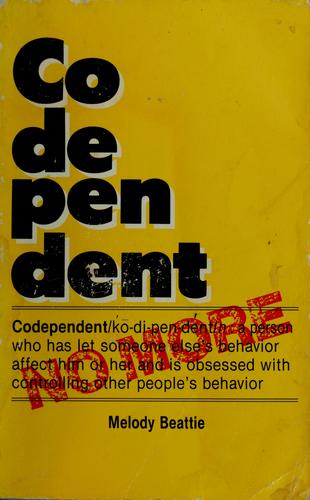
First published in 1986, Melody Beattie's groundbreaking work introduced the concept of codependency to a mainstream audience and has since sold millions of copies worldwide. Codependency — the compulsive focus on others' needs and feelings to the detriment of one's own — is intimately connected to jealousy: both conditions share the same root in deep insecurity, anxious attachment, and a sense of self that depends on the behavior and approval of another person. Beattie writes from personal experience, having struggled with these patterns herself, which gives the book a warmth and authenticity that purely clinical texts often lack. Her discussion of detachment — learning to release our obsessive investment in others' choices without becoming emotionally cold or abandoning genuine care — is particularly valuable for anyone caught in jealousy cycles. The book's recovery orientation makes it uniquely actionable: not just insight but a genuine path toward a more autonomous, self-directed emotional life. A classic that remains urgently relevant.

Set within the format of an intensive psychological seminar, this novel by Dirk Werner explores what happens when a group of emotionally wounded individuals are brought together in a therapeutic setting and forced to confront the patterns that have defined — and damaged — their relationships. Werner uses the group-therapy framework brilliantly: the characters are clearly individuated, their emotional wounds recognizable, and their interactions generate the kind of dramatic tension that keeps narrative momentum alive while simultaneously illuminating psychological truth. Jealousy, abandonment fear, possessiveness, and the hunger for genuine intimacy are all present — portrayed not as melodrama but as comprehensible responses to specific relational histories. The book demonstrates Werner's ability to deliver clinical insight through fiction without sacrificing either readability or psychological accuracy. For readers who absorb psychological concepts more easily through story than through explanation, this novel offers a rich and emotionally resonant education in how relationships actually work — and how they can be transformed.

Robert Leahy is one of the world's leading cognitive therapists, and this is perhaps the most clinically rigorous book on jealousy available for general readers. Drawing on cognitive-behavioral and acceptance-based approaches, Leahy dismantles the psychological mechanisms that sustain jealousy: the selective attention to threat, the reassurance-seeking that paradoxically amplifies insecurity, the rumination loops, and the catastrophic interpretations that transform ordinary ambiguity into perceived betrayal. What makes this book particularly valuable is its refusal to reduce jealousy to either a character flaw or a simple communication problem. Leahy treats it as a genuine psychological condition with identifiable cognitive structures — and therefore as something that responds to specific, learnable interventions. The exercises throughout are adapted from validated therapeutic protocols, giving readers not just understanding but genuine tools for change. For anyone who has tried willpower, reassurance, and reasoning their way out of jealousy without success, this book offers a fundamentally different and demonstrably effective approach.

One of the least discussed but most practically relevant phenomena in relationships is the way emotionally insecure individuals — often unconsciously — test their partners' commitment, reliability, and affection. These tests range from subtle withdrawal to provocative behavior designed to elicit jealousy, and they place enormous strain on even the most patient and committed partners. Dirk Werner's guide to navigating these dynamics stands out for its psychological depth and its refusal to assign blame. He explains the attachment-based origins of testing behavior with precision, shows how partners typically respond in ways that inadvertently reinforce the very insecurity they are trying to soothe, and provides a clear framework for responding with sovereignty — not indifference or manipulation, but genuine emotional groundedness. For anyone who has found themselves walking on eggshells, constantly proving their loyalty, or confused by a partner's seemingly irrational provocations, this book is both vindicating and practically transformative. Werner at his most clinically precise.
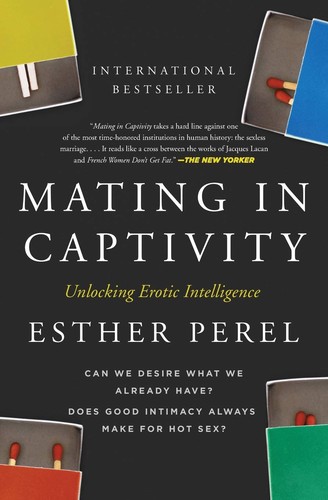
Esther Perel is among the most original thinkers in contemporary relationship psychology, and this book — her first — introduced her central paradox to a global readership: the qualities that make relationships feel safe and secure are often in direct tension with those that sustain erotic vitality and desire. Perel argues that domesticity, familiarity, and the merger of identities that long-term partnership tends to produce can suffocate desire even between people who genuinely love each other. This dynamic is intimately connected to jealousy: the possessive impulse that seeks to eliminate any source of rivalry is often precisely the impulse that destroys the otherness that attraction requires. The book is brilliant on the psychology of desire, mystery, and the erotic imagination — and profoundly challenging to conventional notions of what healthy relationships should look like. Perel does not provide easy answers because the tensions she identifies are real. But she opens a space for couples to have conversations that most therapy never reaches.

Infidelity is the most extreme expression of jealousy's worst fear — and Perel's exploration of it is the most nuanced and unsettling treatment of the subject available in popular psychology. Rather than offering moral verdicts, Perel examines the full complexity of affairs: what they mean to those who have them, what they reveal about the relationships they occur within, and — most provocatively — whether they can sometimes serve as a catalyst for genuine transformation. Her argument is not a defense of infidelity but a demand for honest reckoning with the psychological realities that make relationships vulnerable. The jealousy that follows betrayal is examined with particular care: its intensity, its function as a signal of attachment depth, and its role in the often agonizing process of deciding whether to rebuild or release. For anyone who has experienced infidelity — as the betrayed, the betrayer, or the outside party — this book provides the kind of honest, compassionate analysis that makes genuine understanding possible. Perel at her most searching.

Shirley Glass spent over two decades researching infidelity as a clinical psychologist and marriage therapist, and the result is the most empirically grounded book on the subject available to general readers. Glass's central contribution is her concept of "walls and windows" — the idea that healthy partnerships maintain transparency (open windows) between partners while building appropriate walls around the relationship against outside emotional intimacy. When these structures are reversed — when more emotional openness exists with a friend, colleague, or online contact than with one's partner — the conditions for emotional and eventually physical infidelity are already in place. The book is invaluable for understanding the jealousy that often accompanies close opposite-sex friendships: when it is a realistic assessment of genuine risk and when it is anxious misreading of innocent connection. Glass also provides the most clinically detailed and compassionate guide to affair recovery available in print. Essential reading for couples navigating either prevention or healing.

Selbstliebe statt Perfektion examines one of the most underexplored drivers of relational suffering: the connection between perfectionism, female narcissism, and the inability to sustain genuine intimacy. Werner argues that women who compulsively seek external validation — through relationships, status, or the performance of flawlessness — are rarely acting from confidence. Beneath the curated surface lies a profound self-love deficit, and it is this deficit that makes jealousy so corrosive. When self-worth depends on a partner's attention, any perceived rival becomes an existential threat. The book traces how perfectionist self-expectations breed chronic dissatisfaction in relationships, how narcissistic patterns emerge as a defense against feelings of inadequacy, and how these dynamics fuel cycles of jealousy, control, and emotional withdrawal. Werner's core insight is liberating: authentic self-worth cannot be borrowed from a relationship — it must be cultivated from within. For readers trapped in patterns of comparison, possessiveness, or the exhausting pursuit of relational perfection, this book offers a clear path toward emotional sovereignty and lasting partnership.

Marshall Rosenberg's framework for compassionate communication — developed over decades of work in conflict resolution across cultures — is among the most useful practical tools available for couples struggling with jealousy, control dynamics, and recurring conflict. NVC's four-component model (observations, feelings, needs, requests) provides a structure for expressing difficult emotions, including jealousy, without blame or demand — and for hearing the underlying needs beneath a partner's seemingly unreasonable behavior. The book is particularly valuable because jealousy in relationships almost always involves a communication breakdown: the jealous person expresses their distress through accusation or withdrawal rather than through honest vulnerability, which triggers defensiveness rather than the reassurance and connection they actually need. Rosenberg's method short-circuits this cycle by teaching both how to speak from genuine feeling and how to listen beneath the surface of apparently hostile communication. The case studies are instructive, the language learnable, and the results — for couples willing to practice — genuinely transformative.
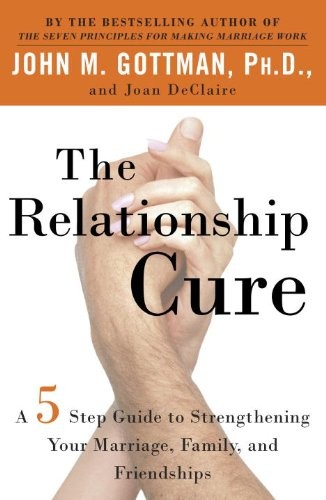
John Gottman is the world's most cited researcher on marital stability, and "The Relationship Cure" applies his laboratory findings to a broader range of relationships — not only couples but friendships, families, and colleagues. The book's central concept is the "bid for connection": the small, often implicit emotional bids we make constantly throughout the day, and the three possible responses — turning toward, turning away, or turning against. Gottman's research shows that couples who habitually turn toward each other's bids — even imperfectly — build the emotional bank account that makes jealousy, conflict, and disappointment manageable. Conversely, the chronic failure to respond to bids predicts relationship dissolution with striking accuracy. For anyone puzzled by how jealousy escalates from minor triggers into major relationship crises, this book offers the clearest explanation available: it is not the jealousy itself but the years of accumulated emotional disconnection that transform it from a manageable emotion into a relationship-threatening pattern. Rigorous, warm, and essential.

Mira Kirshenbaum takes a deliberately non-judgmental approach to infidelity that many readers find simultaneously disorienting and liberating. Rather than treating affairs as moral failures, she examines the seventeen distinct motivations she has identified through decades of clinical practice — from the simple escape from an unsatisfying marriage to the complex search for a lost self. Her taxonomy of affair types is clinically useful precisely because it moves beyond the binary of betrayer and betrayed, revealing instead the full psychological complexity of why people who consider themselves ethical nonetheless find themselves outside their committed relationships. For partners dealing with jealousy triggered by actual or suspected infidelity, the book offers a more nuanced picture than moral condemnation allows. It is also one of the few books that addresses honestly — without prescribing a predetermined outcome — the question of whether to stay or leave. Kirshenbaum's framework helps people make that decision from a place of genuine self-understanding rather than shame or reactive impulse.

Eva Illouz is a sociologist, and her perspective on modern romantic suffering is unlike anything else in this list — neither clinical nor self-help in orientation, but a rigorous sociological analysis of why love in contemporary capitalist societies is structurally organized to produce pain, insecurity, and chronic jealousy. Illouz argues that the "free market" of contemporary dating, the commodification of romantic choice, and the dissolution of traditional social structures that once constrained both commitment and its alternatives have created conditions in which emotional suffering is not an accident but a predictable systemic outcome. The book is intellectually demanding but enormously clarifying: if you have ever felt that your jealousy or romantic suffering is irrational despite knowing its causes, Illouz offers the unsettling possibility that it is, in fact, a rational response to genuinely difficult social conditions. A challenging, original, and ultimately liberating read that places individual emotional experience in its full cultural and historical context. Essential for the intellectually curious.